
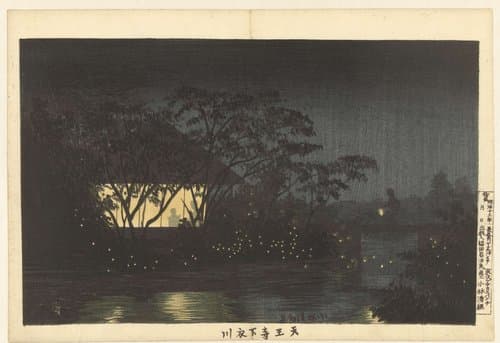
De Komoro rivier bij Tennoji
Medium
nishiki-e
Dimensions
231; 337
Rights
Public Domain
About this artwork
verzamelaarsmerk, verso, gestempeld: Lugt 2760
Art Historical Context
**De Komoro rivier bijnoji** is a captivating *nishiki-e* woodblock print by Kobayashi Kiyochika, created 1880. Measuring just 231 mm high by 337 mm wide, this intimate landscape captures the serene Komoro River near Tenno in Osaka, Japan, during the early Meiji era. Kiyika, a pioneering ukiyo-e artist1847–1915), blended traditional Japanese printmaking with emerging Western influences like perspective and subtle shading, marking a transition from Edo-period aesthetics to modern sensibilities. As a *nishiki-e*—literally "brocade picture"—the work showcases the exquisite technique of multilayered woodblock printing, where vibrant colors were achieved through precise carving and overprinting up to 10–15 times. This luxurious medium, popular in the late 19th century, highlights everyday beauty amid Japan's rapid Westernization, evoking nostalgia for natural harmony. Kiyochika's masterful use of light and atmosphere invites viewers to feel the river's gentle flow. On the verso, a collector's mark (Lugt 2760) stamps its provenance, linking it to esteemed European collections and underscoring the global allure of ukiyo-e during the Japonisme craze. A gem for admirers of Japanese art, it whispers tales of a changing world. (198 words)
About the Artist
Kobayashi Kiyochika · 1847–1915
Japanese, 1847–1915