
De vijf elementen
ca. 1820
Medium
nishikie, with metallic pigments and blindprinting
Dimensions
203; 179
Rights
Public Domain
About this artwork
kleurenhoutsnede; blinddruk; lijnblok in zwart met kleurblokken; metaalpigmenten
Art Historical Context
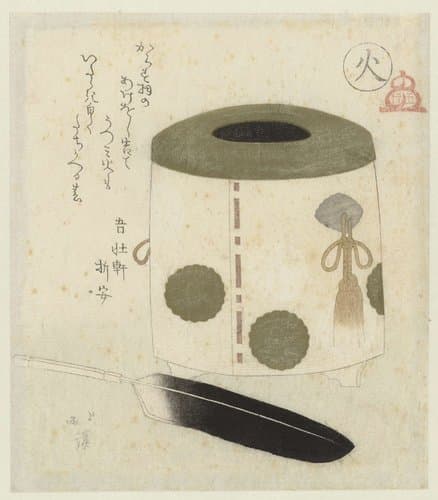
**De vijf elementen (The Five Elements)** *Totoya Hokkei, ca. 1820* Nishikie woodblock with metallic pigments and blind, 203 × 179 mm Created around 1820 during Japan's Edo period, *De vijf elementen* is a exquisite nishikie—or "brocade printby Totoya Hokkei (1780–1850), a master ukiyo-e artist and pupil of the legendary Katsushika Hokusai. This intimate surimono-style print likely depicts the five classical elements (earth, water, fire, wind, and void), drawing from East Asian philosophy to symbolize harmony in nature and the cosmos. Hokkei's work captures the "floating world" ethos of ukiyo-e, blending poetic symbolism with vibrant, luxurious craftsmanship commissioned for private patrons. The print's technical brilliance shines in its multi-block woodblock process: a precise black key block outlines forms, overlaid with color blocks, metallic pigments for shimmering gold or silver effects, and blindprinting (embossing) that adds subtle texture without ink. These innovations elevated nishikie beyond mass-produced prints, making them collector's treasures that mimicked lavish textiles. At just 20 cm tall, its compact scale invites close contemplation, highlighting Hokkei's skill in evoking elemental forces through delicate lines and luminous hues. This artwork exemplifies the golden age of Japanese printmaking, where artistry met innovation, influencing global aesthetics from Impressionism onward. A gem for visitors, it reminds us of nature's enduring poetry.
About the Artist
Totoya Hokkei · 1780–1850
Totoya Hokkei (魚屋 北渓, 1780–1850), born Iwakubo Tatsuyuki in Edo (modern Tokyo), began his life as a humble fishmonger in the Yotsuya Samegahashi district, a trade reflected in his art name "Totoya," meaning fish shop. He transitioned to art through rigorous training, first studying under Kanō Yōsen'in Korenobu, head of the Kobikichō branch of the prestigious Kanō school, where he honed landscape p...