
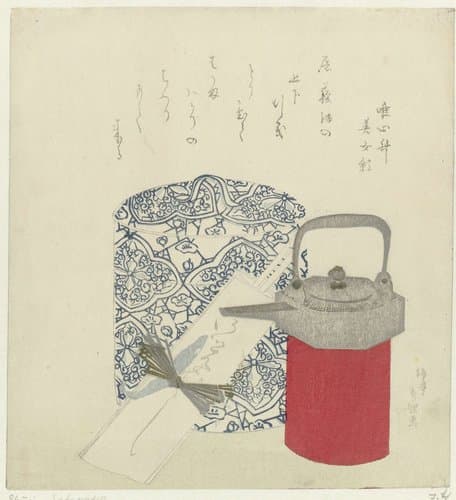
Zilveren rijstwijnpotje en porseleinen pot
1820 - 1829
Medium
color woodcut
Dimensions
198; 182
Rights
Public Domain
About this artwork
verzamelaarsmerk, verso, gestempeld: Lugt 2228
Art Historical Context
**Zilveren rijstwijnpotje en porseleinen pot** (Silver Sake Bottle and Porcelain), a delicate color woodcut by Teisai Hokuba from the 1820s, captures the quiet elegance of everyday Japanese luxury. Hokuba, a talented pupil of the legendary Katsushika Hokusai, was a master of ukiyo-e—the "pictures of the floating world" tradition that celebrated fleeting pleasures through vibrant woodblock prints. This intimate still life, measuring just 198 × 182 mm, showcases two refined vessels: a gleaming silver sake bottle and a porcelain pot, rendered with exquisite attention to texture and light. Created during Japan's Edo period, when ukiyo-e prints flourished as affordable art for urban dwellers, Hokuba's work highlights the artistry of printmaking. Multiple wooden blocks were meticulously carved and inked in layers of color, achieving luminous effects and precise details that mimic the sheen of metal and the subtle crackle of porcelain. Such small-scale prints, possibly a *surimono* (custom commission), were prized for their poetic intimacy. Bearing a collector's mark on the verso (Lugt 2228), this piece bridges art and connoisseurship, evoking the refined tastes of 19th-century Japan. It invites us to savor the beauty in humble objects, a timeless reminder of ukiyo-e's cultural legacy. (198 words)
About the Artist
Teisai Hokuba · 1771–1844
Teisai Hokuba (1771–1844) was a Japanese artist of the Edo period who worked in the tradition of ukiyo-e, the celebrated school of woodblock prints and paintings that depicted the floating world of urban pleasure, theater, landscape, and daily life. A devoted pupil of Katsushika Hokusai — one of the towering figures in the history of Japanese art — Hokuba adopted the prefix of his master's name as...