
"Death of Farud", Folio from a Shahnama (Book of Kings) of Firdausi
ca. 1610
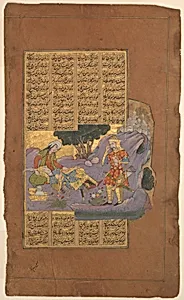
Medium
Ink, opaque watercolor, and gold on paper
Dimensions
Page: H. 8 in. (20.3 cm) W. 4 7/8 in. (2.4 cm) Painting: H. 3 5/16 in. (8.4 cm) W. 3 9/16 in. (9.1 cm)
Classification
Codices
Department
Islamic Art
Museum
Metropolitan Museum of Art, New York, NY
Credit
Gift of Steven Kossak, The Kronos Collections, 1985
Accession Number
1985.405.1
Rights
Public Domain
Tags
Art Historical Context
This exquisite folio, titled *Death of Farud*, comes from a *Shahnama* (Book of Kings), the monumental Persian epic poem composed by Abu'l Qasim Firda around 1010 CE. Dating to circa 1610, it a dramatic moment from the epic's tales of ancient Iranian kings and heroes, where Farud meets his tragic end amid themes of valor, betrayal, and mortality. As part of the Safavid-era manuscript tradition, such folios were prized treasures, blending poetry with vivid illustration to preserve Iran's mythic history for royal courts and scholars. Rendered in ink, opaque watercolor, and gold on paper, the miniature exemplifies Persian painting's mastery of delicate linework and luminous color. The small painting (3 5/16 x 3 9/16 inches) bursts with intricate details—flowing robes, expressive figures, and golden highlights—that draw viewers into the emotional intensity of the scene. Opaque watercolors create jewel-like vibrancy, while gold adds a divine glow, techniques honed in Islamic art workshops to elevate storytelling. Housed in the Metropolitan Museum of Art's Islamic Art Department, this codex page reflects the cultural pinnacle of 17th-century Iran, where *Shahnama* manuscripts symbolized national identity and artistic excellence. Visitors are invited to ponder the timeless drama of death and heroism in Firdausi's words, brought to life through centuries of masterful craftsmanship.
About the Artist
Abu'l Qasim Firdausi · 935–1020
Abu'l Qasim Firdausi, born around 940 in the village of Paj near Tus in Khorasan (modern-day Iran), emerged from a family of landed gentry known as dehqans, who preserved ancient Iranian oral traditions amid the cultural renaissance of the Samanid Empire. Little is documented about his early life or formal training, though he likely received a basic education including Arabic literacy, immersing h...