
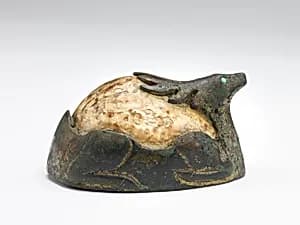
Deer-shaped ornament
206 BCE-220 CE
Classification
Jewelry and Ornament
Department
Smithsonian Collection
Museum
Smithsonian American Art Museum
Credit
Gift of Charles Lang Freer
Accession Number
F1919.68
Rights
Public Domain
Tags
About this artwork
Reportedly excavated in Shensi [1]
Art Historical Context
This exquisite **Deer-shaped ornament**ails from China's Han dynasty (206 BCE– CE), a golden era of innovation, cultural flourishing, and refined artistry. Reportedly excavated in Shensimodern Shaanxi province), a region rich in ancient archaeological treasures, it entered the Smithsonian American Art Museum as a gift from Charles Lang Fre, the pioneering collector of Asian art whose donations formed the core of the Freer GalleryCrafted in bronze through skilled casting techniques, the ornament features gilding and inlay that highlight the Han mastery of metalwork. These methods created shimmering gold accents and intricate designs on the deer's graceful form, transforming a simple animal motif into a luxurious piece of jewelry or personal adornment. Deer held cultural resonance in ancient China, often evoking themes of grace, longevity, and harmony with nature—fitting for elite accessories or ritual objects. As a testament to Han technological prowess, this small yet striking artifact invites us to marvel at the everyday elegance of imperial life, bridging the worlds of craftsmanship and symbolism across millennia.
About the Artist
Unknown
The artist designated as "Unknown" in our virtual museum's collection exemplifies a poignant chapter in art history: creators whose identities have faded into obscurity despite the enduring power of their work. With only one known artwork attributed to them in our holdings, this figure represents countless anonymous hands that shaped visual culture across centuries. Museums worldwide, including th...