
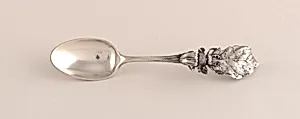
Demitasse Spoon with Beetle
ca. 1890
Classification
cutlery
Department
Smithsonian Collection
Museum
Smithsonian American Art Museum
Credit
Museum purchase from Smithsonian Institution Collections Acquisition Program, Decorative Arts Association Acquisition, and Sarah Cooper-Hewitt Funds
Accession Number
1996-56-27
Rights
Public Domain
About this artwork
Research in Progress
Art Historical Context
Nestled in the Smithsonian American Art Museum's collection the *Demitasse Spoon with Beetle* French artist Charles Victor Gib dates to around 1890. This piece of cutlery exemplifies the refined world of late 19th-century decorative, where everyday objects like demitasse spoons—petite utensils designed for serving after-dinner coffee—were elevated into miniature sculptures. Gibert, a skilled French craftsman, adorned this functional item with a beetle motif, blending whimsy and naturalism in a nod to the era's fascination with the organic world. Crafted during France's fin-de-siècle period, just as Art Nouveau began to emerge, the spoon reflects a cultural shift toward intricate, nature-inspired designs in silverwork and metalwork. Though the exact medium awaits further research, its classification as cutlery highlights how European artisans transformed utilitarian items into conversation pieces for the bourgeois table. Beetles, often symbols of resilience and metamorphosis in decorative motifs, add an intriguing layer of symbolism, inviting viewers to ponder the interplay between utility and artistry. Acquired through museum purchases including the Decorative Arts Association and Sarah Cooper-Hewitt Funds, this spoon invites us to appreciate the subtle elegance of French design. Ongoing research promises to uncover more about Gibert's techniques and influences, enriching our understanding of this hidden gem.