
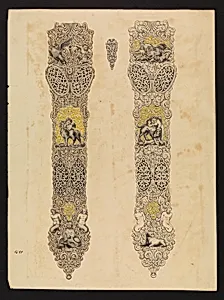
Design for Two Sides of a Dagger Sheath
ca. 1850–55
Medium
Pen, ink, and wash on paper
Dimensions
13 5/8 x 10 1/8 in. (34.5 x 25.7 cm)
Classification
Works on Paper-Drawings
Culture
Spanish
Department
Arms and Armor
Museum
Metropolitan Museum of Art, New York, NY
Credit
Purchase, Arthur Ochs Sulzberger Bequest, 2015
Accession Number
2015.100
Rights
Public Domain
Tags
Art Historical Context
Step into the intricate world of 19th-century Spanish metalwork with Eusebio Zuloaga's *Design for Two Sides of Dagger Sheath* (ca. 1850–55). Created by the renowned Eibar-based artisan from the celebrated Zuloaga family—masters of damascene inlay and ornamental arms—this pen, ink, and wash drawing paper served as a precise blueprint for a luxurious dagger sheath. At 13⅝ × 10⅛ inches, it captures two views adorned with playful yet elegant motifs: frolicsome Cupids, graceful birds, and loyal dogs, evoking themes of love, nature, and the hunt that were hallmarks of Renaissance-inspired revivals in Spanish decorative arts. Zuloaga's technique shines through fine pen lines for crisp details and subtle wash for depth and shading, bridging the gap between draftsmanship and the shimmering gold-and-silver sheaths his workshop produced. These designs reflect mid-19th-century Spain's Romantic fascination with historicism, where functional arms transformed into status symbols for nobility and collectors, blending utility with opulent storytelling. Housed in the Metropolitan Museum of Art's Arms and Armor Department, this work highlights the Zuloaga legacy in elevating weaponry to high art, offering a glimpse into an era when every blade told a tale.