
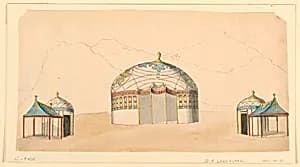
Designs for Pavilions
Medium
architecture
Classification
architecture
Department
Smithsonian Collection
Museum
Smithsonian American Art Museum
Credit
Museum purchase through gift of Mrs. John Innes Kane
Accession Number
1948-40-92
Rights
Public Domain
About this artwork
Research in Progress
Art Historical Context
Frederick Crace (1779–1859), a prominent English interior decorator and designer from a family renowned for supplying royal households with wallpapers, furnishings, and decorative schemes, created *Designs for Pavilions* between 1815 and 1822. During the Regency era, a time of opulent architectural experimentation under the influence of the Prince Regent (later George IV), Crace's work reflected the era's fascination with neoclassical and picturesque garden structures. Pavilions—elegant, often temporary buildings used for leisure, tea parties, or as scenic follies—embodied the romantic ideal of harmonizing architecture with nature. These architectural designs, likely rendered in ink, watercolor, or gouache on paper (typical of Crace's precise, ornamental style), showcase his expertise in blending functionality with aesthetic delight. Crace's family firm collaborated on grand projects like Buckingham Palace interiors, highlighting his skill in scalable, decorative architecture. Though research on this specific set is ongoing, the drawings exemplify Regency design principles: symmetry, classical motifs, and lightweight forms suited to English country estates. Now housed in the Smithsonian American Art Museum through a generous purchase funded by Mrs. John Innes Kane, these designs offer a window into early 19th-century transatlantic tastes, bridging British innovation with American collecting interests. Visitors can appreciate how such visions shaped leisurely landscapes still echoed in modern gardens.