
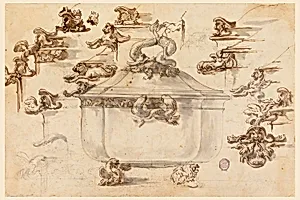
Designs for Silver Tureen
Medium
tableware designs
Classification
tableware designs
Department
Smithsonian Collection
Museum
Smithsonian American Art Museum
Credit
Museum purchase through gift of various donors
Accession Number
1901-39-1146
Rights
Public Domain
About this artwork
Research in Progress
Art Historical Context
Filippo Marchionni, a prominent Italian artist and architect (1732–1805), created these *Designs for Silverureen* in 1769, capturing the elegance of late 18th-century luxury tableware. As preparatory sketches, they likely outline ornate forms and decorative motifs for a grand silver serving vessel—a tureen—intended as a centerpiece for aristocratic dining. This medium of design drawings was essential in the era's workshops, bridging artistic vision with skilled craftsmanship in precious metals. Set against Italy's vibrant Rococo-to-Neoclassical transition, Marchionni's work reflects the period's emphasis on refined ornamentation and symmetry, blending whimsy with emerging classical restraint. Silver tureens symbolized wealth and hospitality, often featuring scrolling vines, mythological figures, or architectural elements that echoed the grandeur of Roman palaces. These designs highlight how tableware became canvases for artistic innovation, influencing European courts and elite households. Today, housed in the Smithsonian American Art Museum through a generous museum purchase, these drawings offer a glimpse into international design exchanges that shaped American collections. With research ongoing, they invite us to ponder the artistry behind everyday opulence.