
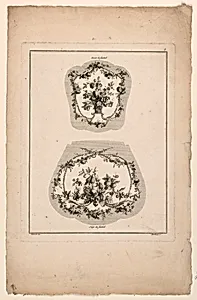
Designs for Tapestry Chair Seats, Plate 2 from "Cahier de Cartouches et Ornemens de l'Oeuvre de Ranson"
Medium
Classification
Department
Smithsonian Collection
Museum
Smithsonian American Art Museum
Credit
Gift of Eleanor and Sarah Hewitt
Accession Number
1931-94-60
Rights
Public Domain
About this artwork
Research in Progress
Art Historical Context
Step into the elegant world of 18th-century French decorative arts with *Designs for Tapestry Chair Seats, Plate 2* from Pierre-Gabriel Berthault's *Cahier de Cartouches et Ornemens de l'Oeuvre de Ranson* (1778). This exquisite print, created by the skilled French engraver Berthault (1737–1831), showcases intricate patterns intended for luxurious tapestry-upholstered chair seats. As part of a portfolio dedicated to ornamental motifs and cartouches—those fanciful scroll-like frames— it captures the refined aesthetic of late Rococo France, where opulent furnishings defined aristocratic interiors. Berthault's mastery of printmaking allowed these designs to be widely disseminated, bridging the gap between elite designers and skilled artisans. Produced on the cusp of the French Revolution, the work reflects a golden age of ornamental innovation, drawing from the legacy of earlier masters like Jean Ranson. Tapestry seats, woven with vibrant silks and wools, were status symbols in salons and châteaux, blending comfort with artistic splendor. Housed in the Smithsonian American Art Museum through the generous gift of Eleanor and Sarah Hewitt, this plate invites us to appreciate how prints like this fueled the decorative arts revolution, influencing furniture from Versailles to colonial drawing rooms. A testament to craftsmanship amid changing times.