
Die Eismänner
vor 1902
Medium
Öl auf Leinwand
Dimensions
213 x 255 cm
Classification
Gemälde
Department
Belvedere Collection
Museum
Belvedere
Credit
Belvedere, Vienna
Accession Number
440
Rights
Public Domain
About this artwork
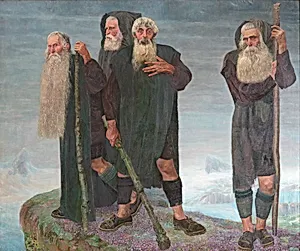
Die Matreier Heimatforscher Tobias Trost und Alexander Brugger identifizierten die in den Eismännern porträtierten Osttiroler Persönlichkeiten. Von links nach rechts: Alois Waldner (vulgo Lichtackerer), Georg Wolsegger (vulgo Birnbaumer, Postmeister und Bürgermeister), Hannes Raneburger (volgo Gonn), Johann Trager (vulgo Lackner auf Glanz).
Art Historical Context
**Die Eismänner** (The Icemen), painted by Austrian artist Karl Mediz before 1902, is a striking large-scale oil on canvas (213 x 255 cm) now housed in Vienna's Belvedere Collection. Mediz, known for his evocative portrayals of everyday life and regional characters, captures four rugged men from East Tyrol in a group portrait that exudes the harsh beauty of alpine existence. The monumental size suggests it was intended for public display, emphasizing communal identity and labor in a mountainous region where ice harvesting was vital. From left to right, the figures are local Osttiroler personalities: Alois Waldner (known as Lichtackerer), Georg Wolsegger (Birnbaumer, postmaster and mayor), Hannes Raneburger (Gonn), and Johann Trager (Lackner auf Glanz). Their identification by Matrei researchers Tobias Trost and Alexander Brugger highlights the painting's role in preserving cultural memory, linking anonymous workers to named community pillars. These "Eismänner" likely represent ice laborers, symbols of resilience in Tyrol's unforgiving winters. This work's historical significance lies in its documentary quality, bridging art and ethnography at the turn of the century. Mediz's realistic style immortalizes vanishing trades, offering visitors a window into Austria's rural heritage and the dignity of ordinary lives.