
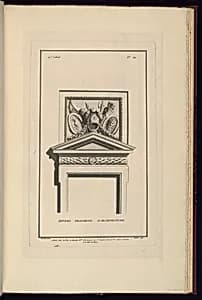
DIVERS FRAGMENS DARCHITECTURE
Medium
Classification
Department
Smithsonian Collection
Museum
Smithsonian American Art Museum
Credit
Purchased for the Museum by the Advisory Council
Accession Number
1921-6-254-45
Rights
Public Domain
About this artwork
Research in Progress
Art Historical Context
**Divers Fragmens d'Architecture** Juste-François Boucher (French, 1736–1782), ca. 1775* *Print; Smithsonian American Art Museum* e-François Boucher, of the renowned Rococo François Boucher, created this print around 1775 during a vibrant period in French art. As a skilled engraver and designer, he contributed to the dissemination of elegant architectural motifs through prints, bridging the ornate Rococo style of his father's era with emerging Neoclassical interests. Titled *Divers Fragmens d'Architecture* ("Various Fragments of Architecture"), the work likely showcases intricate details of classical elements—such as columns, pediments, or ornamental fragments—captured with precise line work typical of 18th-century French printmaking. Prints like this were invaluable in the Enlightenment age, serving as affordable references for architects, decorators, and collectors across Europe and beyond. They fueled the revival of antiquity-inspired designs, influencing grand estates and public buildings. Acquired by the Smithsonian American Art Museum through its Advisory Council, this piece highlights transatlantic exchanges, where European graphic arts inspired early American tastes in architecture and design. Though research continues, Boucher's print stands as a testament to the era's fascination with harmonious form and historical revival, inviting visitors to appreciate the delicate artistry that shaped modern aesthetics.