
Dixie
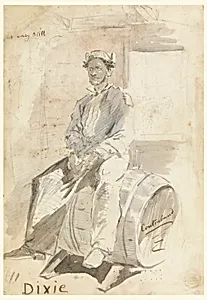
Medium
figures
Classification
figures
Department
Smithsonian Collection
Museum
Smithsonian American Art Museum
Credit
Gift of Charles Savage Homer, Jr.
Accession Number
1912-12-120
Rights
Public Domain
About this artwork
Research in Progress
Art Historical Context
**Dixie** *Winslow Homer (American, 18361910), 1861 Figures; Smithsonian American Art Museum, Gift of Charles Savage Homer Jr.* Created in 1861, the outset of the American Civil War *Dixie* captures Winslow Homer's early mastery during a pivotal moment in U.S. history. Homer a self-taught artist who rose to prominence as a Harper's Weekly illustrator, often depicted soldiers, everyday life, and the human cost of conflict in his works. The title evokes "Dixie," the popular song symbolizing the American South and Confederate spirit, suggesting this piece reflects the era's deep regional divides and wartime fervor. Classified as "figures," the work likely highlights Homer's skill in rendering human forms with realistic detail and emotional depth—a hallmark of his emerging realist style. Though research on this piece is ongoing, it exemplifies Homer's transition from commercial illustration to fine art, blending sharp observation with subtle narrative power. His figures often convey resilience amid turmoil, making *Dixie* a poignant window into 19th-century America. Housed in the Smithsonian American Art Museum, this gift from the artist's family underscores its personal and cultural legacy. Visitors will appreciate how Homer's unvarnished portrayals continue to resonate, inviting reflection on unity and division.