
Entablature Designs
mid- 17th–early 18th century
Classification
Department
Smithsonian Collection
Museum
Smithsonian American Art Museum
Credit
Purchased for the Museum by the Advisory Council
Accession Number
1921-6-341-71
Rights
Public Domain
About this artwork
Research in Progress
Art Historical Context
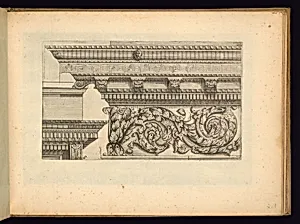
Jean Le Pautre (1618–1682), a leading French engraver and designer of the Baroque era, created *Entablature Designs* amid the opulent architectural revival under Louis XIV. Working in mid-17th-century Paris, Le Pautre specialized in intricate ornamental prints that captured the grandeur of classical architecture, blending Renaissance symmetry with exuberant French flair. These designs for entablatures—the horizontal bands crowning columns in classical buildings—exemplify his mastery of the period's goût français, influencing decorators and architects across Europe. As a print from the Smithsonian American Art Museum's collection (purchased by the Advisory Council), this work highlights the era's fascination with standardized yet lavish motifs for palaces and public spaces, like those at Versailles. Le Pautre's engravings democratized elite design, allowing artisans to replicate elaborate friezes, cornices, and architraves. Though research continues, the piece underscores prints' role in disseminating Baroque aesthetics, bridging fine art and practical architecture. Visitors will appreciate how these timeless patterns evoke the splendor of 17th-century France, where every detail proclaimed royal power and artistic innovation.