
Classification
ceramics
Department
Smithsonian Collection
Museum
Smithsonian American Art Museum
Credit
Gift of Marcia and William Goodman
Accession Number
1984-84-9
Rights
Public Domain
About this artwork
Research in Progress
Art Historical Context
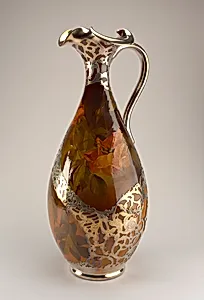
**Ewer, Rookwood Pottery, 1894** This elegant ewer, crafted bywood Pottery in 1894, exemplifies the flourishing of one of America's most renowned ceramics studios. Founded in 0 in Cincinnati, Ohio, by Maria Longworth Storer, Rookwood emerged during the Arts and Crafts movement championing handmade pottery as a counterpoint to industrialized production. The studio quickly gained international acclaim for its innovative techniques, including slip-painted decoration and iridescent glazes that captured nature's subtle hues. Ewers like this one were prized functional art pieces, blending utility with artistic expression in the late 19th century. As a ceramic vessel from Rookwood's formative years, this ewer highlights the studio's commitment to high-quality stoneware or porcelain, often adorned with delicate floral motifs or landscapes. Rookwood potters, many women artists, elevated American ceramics to museum-worthy status, exhibiting at world's fairs and influencing the Art Nouveau style. Though specific details on its medium and decoration are under research, its presence in the Smithsonian American Art Museum—gifted by Marcia and William Goodman—underscores its enduring cultural value. Visitors will appreciate how this piece reflects America's artistic awakening, bridging Victorian elegance and modern craft. A testament to Rookwood's legacy, which continued until 1967, it invites us to savor the tactile beauty of hand-thrown pottery. (198 words)