
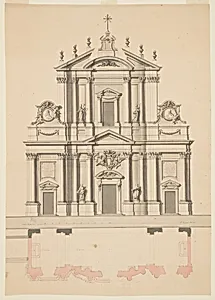
Facade of Church, Plan of
1757–58
Medium
architecture
Classification
architecture
Department
Smithsonian Collection
Museum
Smithsonian American Art Museum
Credit
Museum purchase through gift of various donors and from Eleanor G. Hewitt Fund
Accession Number
1938-88-7301
Rights
Public Domain
About this artwork
Research in Progress
Art Historical Context
Nestled in the Smithsonian American Art Museum's collection, *Facade of Church, Plan of* is a meticulously drafted architectural drawing from 1757–58, its artist remaining unknown. Created during the late colonial era in America, this plan captures the front elevation of a church—a vital symbol of community and faith in the 18th century. Acquired through museum purchase with gifts from various donors and the Eleanor G. Hewitt Fund, it exemplifies the precision of period architectural drafting, likely rendered in ink and scale to guide construction or renovation. In an age when churches often served as the grandest public structures in growing settlements, this facade design reflects the blend of European influences like Georgian symmetry with emerging American practicality. Such plans were essential tools for builders, highlighting proportions, window placements, and ornamental details that conveyed piety and civic pride. Though research into its exact origins is ongoing, the drawing offers a window into colonial craftsmanship and the role of sacred spaces in early U.S. society. Visitors are invited to ponder: Which church might this have graced? As studies progress, this artifact promises richer insights into 18th-century design.
About the Artist
Unknown
The artist designated as "Unknown" in our virtual museum's collection exemplifies a poignant chapter in art history: creators whose identities have faded into obscurity despite the enduring power of their work. With only one known artwork attributed to them in our holdings, this figure represents countless anonymous hands that shaped visual culture across centuries. Museums worldwide, including th...