
Festival
18th century
Medium
landscapes
Classification
landscapes
Department
Smithsonian Collection
Museum
Smithsonian American Art Museum
Credit
Gift of the Estate of Mrs. Robert H. Patterson
Accession Number
1941-31-320
Rights
Public Domain
About this artwork
Research in Progress
Art Historical Context
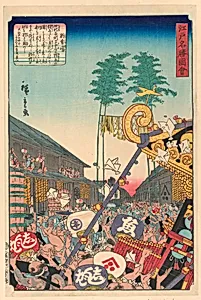
Ando Hiroshige (1797–1858), a master of Japanese ukiyo-e wood prints, captures the vibrant energy of everyday life in his artwork *Festival*. Active during Japan's Edo period, Hiroshige revolutionized landscape art by blending poetic natural scenes with human activity, influencing later Impressionists like Monet and Van Gogh. This 18th-century piece, classified as a landscape, likely depicts a traditional Japanese matsuri—festivals filled with parades, lanterns, and communal joy—set against evocative scenery, a hallmark of his style. Hiroshige's technique shines in his masterful use of color gradients (bokashi) and dynamic compositions, printed from woodblocks by skilled artisans. These prints were affordable and widely circulated, democratizing art for the masses and preserving fleeting moments of cultural life. Housed in the Smithsonian American Art Museum's Smithsonian Collection (gift of the Estate of Mrs. Robert H. Patterson), *Festival* exemplifies ukiyo-e's "floating world" ethos—celebrating beauty amid transience. Though research continues, this work invites visitors to immerse in Edo-era revelry, where mountains frame merry crowds, evoking timeless harmony between nature and human spirit.