
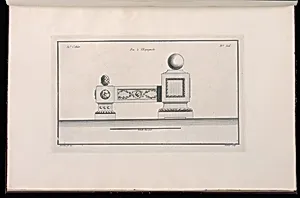
Feu à l'Espagnole
Medium
Classification
Department
Smithsonian Collection
Museum
Smithsonian American Art Museum
Credit
Purchased for the Museum by the Advisory Council
Accession Number
1921-6-255-18
Rights
Public Domain
About this artwork
Research in Progress
Art Historical Context
Juste-François Boucher (6–1782), son of the renowned Rococo François Boucher, created *Feu à l'Espagnole* around 1775. As a skilled French engraver, he specialized in prints that captured the elegance and whimsy of 18th-century decorative arts. This work, housed in the Smithsonian American Art Museum collection, exemplifies the period's fascination with exotic themes, with its title suggesting "Fire in the Spanish Style"— evoking lively motifs like flamenco-inspired dances or festive illuminations popular in European courts. Printed during the late Rococo era, just before the rise of Neoclassicism, the piece highlights the technical virtuosity of engraving. Prints like this were revolutionary for their time, making high art accessible beyond elite patrons through affordable reproductions. Boucher's intricate line work would have conveyed dynamic energy and ornamental flair, reflecting France's cultural exchange with Spain amid Enlightenment-era travels and performances. Acquired through the museum's Advisory Council, *Feu à l'Espagnole* invites visitors to ponder the blend of national styles in 18th-century Europe. Though research continues, it stands as a window into Boucher's legacy and the print's role in democratizing visual culture.