
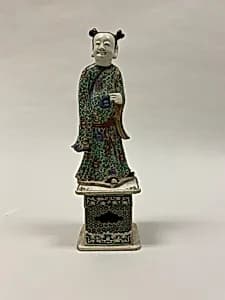
Figure of Han Xiangzi, One of the Eight Immortals
Unknown Artist
19th century
Medium
Biscuit with polychrome enamels (Jingdezhen ware)
Dimensions
H. 14 1/2 in. (36.8 cm); W. 4 1/4 in. (10.8 cm); D. 3 1/4 in. (8.3 cm)
Classification
Ceramics
Culture & Period
China · Qing dynasty (1644–1911)
Department
Asian Art
Museum
Metropolitan Museum of Art, New York, NY
Credit
Bequest of Benjamin Altman, 1913
Accession Number
14.40.213a, b
Rights
Public Domain
Art Historical Context
This exquisite figure depicts Han Xiangzi, one of Eight Immortals from Chinese Daoist mythology, often shown as a youthful scholar playing a flute that brings spring flowers to life. Revered as a symbol of music, poetry, and immortality, Han embodies the pursuit of harmony between humans and nature. Crafted in the 19th century China's Qing dynasty (16441911), this sculpture captures the era's fascination with folklore figures, which adorned homes and temples as talismans of good fortune and longevity. Made from biscuit porcelain—a matte, unglazed body—with vibrant polychrome enamels, the piece hails from Jingdezhen, the imperial porcelain capital renowned for its technical mastery. Artisans there fired enamels at low temperatures to achieve rich, durable colors on the unglazed surface, creating a soft, tactile finish that highlights the figure's flowing robes and serene expression. Standing 14½ inches tall, its modest scale suggests it was likely a devotional or decorative object for scholarly elites. Now in the Metropolitan Museum of Art's Asian Art collection, thanks to the 1913 bequest of collector Benjamin Altman, this work exemplifies Qing ceramic artistry's blend of spiritual symbolism and refined craftsmanship, inviting visitors to ponder the timeless allure of China's immortal legends.