
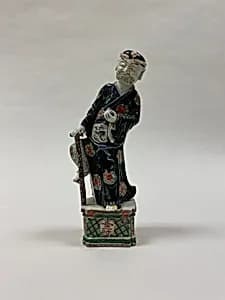
Figure of Li Tieguai, one of the Eight Immortals
Unknown Artist
19th century
Medium
Biscuit with polychrome enamels (Jingdezhen ware)
Dimensions
H. 10 3/4 in. (27.3 cm); W. 4 1/2 in. (11.4 cm); D. 2 3/4 in. (7 cm)
Classification
Ceramics
Culture & Period
China · Qing dynasty (1644–1911)
Department
Asian Art
Museum
Metropolitan Museum of Art, New York, NY
Credit
Gift of Edwin C. Vogel, 1963
Accession Number
63.213.9
Rights
Public Domain
Tags
Art Historical Context
This exquisite porcelain figure depicts Li Tieguai, one of the Eight Immortals from Chinese Daoist mythology, crafted in 19th-century Jingdez ware during the Qing dynasty (1644–1911). Produced at China's renowned porcelain capital, Jingdezhen, this piece exemplifies the era's mastery in ceramics, blending spiritual symbolism with imperial artistry. The biscuit porcelain—fired to a matte, unglazed finish—es as a canvas for vibrant polychrome enamels, creating lifelike details in the immortal's flowing robes, expressive face, and attributes like peaches, evoking abundance and immortality. Li Tieguai, often portrayed as a humble beggar-like figure with a gourd of healing elixirs, embodies resilience and benevolence among the Eight Immortals, popular Daoist icons granting wishes for longevity, prosperity, and protection. Such figures were cherished in homes and temples, reflecting Qing society's deep reverence for folklore amid political and cultural shifts. Standing just 10¾ inches tall, this gift to the Metropolitan Museum of Art from Edwin C. Vogel in 1963 highlights the technical finesse of overglaze enameling, where colors fired at low temperatures yielded enduring jewel tones. A testament to everyday devotion, it invites visitors to ponder the immortals' enduring allure in Chinese culture.