
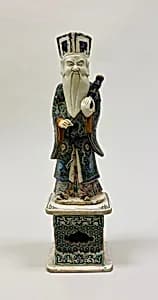
Figure of Zhang Guolao (one of the Eight Immortals)
Unknown Artist
19th century
Medium
Porcelain painted in polychrome enamels on the biscuit (Jingdezhen ware)
Dimensions
H. 14 1/4 in. (36.2 cm); W. 4 1/4 in. (10.8 cm); D. 3 1/4 in. (8.3 cm)
Classification
Ceramics
Culture & Period
China · Qing dynasty (1644–1911)
Department
Asian Art
Museum
Metropolitan Museum of Art, New York, NY
Credit
Bequest of Benjamin Altman, 1913
Accession Number
14.40.210a, b
Rights
Public Domain
Tags
Art Historical Context
This exquisite porcelain figure depicts Zhang Guolao, of the beloved Eight Immortals from Chinese Taoist folklore. Known for his eccentric wisdom and longevity, Zhang Guolao is often shown as an elderly sage riding a donkey backward, symbolizing humility and reversal of worldly pursuits. Crafted in 19th-century China during the Qing dynasty (164–1911), this captures the immortals' enduring popularity in art, where they embodied good fortune, spiritual power, and protection for households. Produced at Jingdezhen, the renowned imperial porcelain center, the figure is made of biscuit porcelain—a matte, unglazed body that provides an ideal surface for vibrant polychrome enamel painting. This technique allowed artisans to apply colorful overglaze enamels fired at low temperatures, creating lifelike details in flesh tones, robes, and accessories with remarkable durability and sheen. Standing 14¼ inches tall, its compact form suggests it was likely displayed on an altar or scholar's table. Housed in the Metropolitan Museum of Art's Asian Art department as part of the Bequest of Benjamin Altman (1913), this piece exemplifies Qing ceramic mastery and the cultural reverence for the Eight Immortals, blending artistry with mythology to inspire awe across generations.