
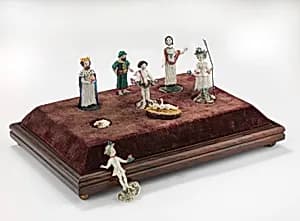
Figurine Group
1700-1800
Medium
Decorative Arts-Glass
Classification
Decorative Arts-Glass
Department
Smithsonian Collection
Museum
Smithsonian American Art Museum
Credit
Smithsonian American Art Museum, Gift of John Gellatly
Accession Number
1929.8.460
Rights
Public Domain
Tags
Art Historical Context
Nestled in the Smithsonian American Art Museum's collection decorative arts, this *Figurine Group* is delicate testament to 18th-century craftsmanship. Created by an unidentified artist between 1700 and 1800, the piece features a clustered arrangement of small figures, likely capturing everyday scenes or whimsical vignettes common in period home decor. Gifted by collector John Gellatly, it reflects the era's growing appreciation for intricate, functional beauty in American households. Glass figurine groups like this one highlight the technical prowess of early colonial and early American glassmakers, who mastered blowing, molding, and sometimes cutting techniques adapted from European traditions. During the 1700s, as trade and immigration brought new skills to the New World, such objects served as status symbols on mantels or tabletops, blending utility with artistry. The medium's transparency and fragility add a luminous quality, making these works both enchanting and precarious heirlooms. Though details on its exact origin remain elusive, this figurine group underscores the cultural shift toward personalized, handcrafted decor in pre-industrial America. Visitors can admire how it bridges Old World influences with emerging American ingenuity, inviting a closer look at the sparkle of history preserved in glass.
About the Artist
Unidentified ( ) · –