
Food bowl
Unknown Artist
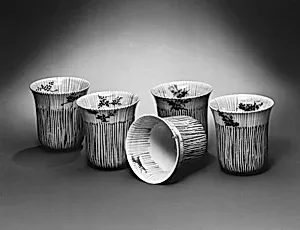
Medium
Stoneware painted with cobalt and amber enamels (Mizoro ware)
Dimensions
H. 2 3/4 in. (7 cm); Diam. 2 5/8 in. (6.7 cm)
Classification
Ceramics
Culture & Period
Japan · Edo period (1615–1868)
Department
Asian Art
Museum
Metropolitan Museum of Art, New York, NY
Credit
The Harry G. C. Packard Collection of Asian Art, Gift of Harry G. C. Packard, and Purchase, Fletcher, Rogers, Harris Brisbane Dick, and Louis V. Bell Funds, Joseph Pulitzer Bequest, and The Annenberg Fund Inc. Gift, 1975
Accession Number
1975.268.597
Rights
Public Domain
Art Historical Context
This petite food bowl, crafted during Japan's Edo period (16151868), exemplifies the era's mastery of everyday ceramics. Measuring just 2¾ inches high and 2⅝ inches in diameter, fits comfortably in the palm, ideal for individual servings in a culture that prized refined simplicity. Produced as Mizoro ware— a distinctive stoneware from regional kilns—this piece reflects the period's flourishing pottery traditions, when peace and prosperity spurred innovation in domestic wares amid booming urban centers like Edo (modern Tokyo). The bowl's medium shines through its vibrant decoration: stoneware painted with cobalt blue and amber enamels, fired to create durable, glossy finishes. Cobalt, imported via trade routes, lent a prized deep blue hue symbolizing luxury, while amber enamels added warm, iridescent glows. These overglaze techniques, perfected in the 17th–19th centuries, elevated humble objects into art, blending functionality with aesthetic delight for tea ceremonies, meals, or gifts. Housed in The Metropolitan Museum of Art's Asian Art Department from the renowned Harry G. C. Packard Collection, this anonymous gem invites us to savor Edo Japan's harmonious blend of utility and beauty—where even a simple bowl whispered elegance.