
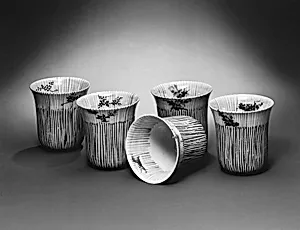
Food bowl
Unknown Artist
Medium
Stoneware painted with cobalt and amber enamels (Mizoro ware)
Dimensions
H. 2 3/4 in. (7 cm); Diam. 2 5/8 in. (6.7 cm)
Classification
Ceramics
Culture & Period
Japan · Edo period (1615–1868)
Department
Asian Art
Museum
Metropolitan Museum of Art, New York, NY
Credit
The Harry G. C. Packard Collection of Asian Art, Gift of Harry G. C. Packard, and Purchase, Fletcher, Rogers, Harris Brisbane Dick, and Louis V. Bell Funds, Joseph Pulitzer Bequest, and The Annenberg Fund Inc. Gift, 1975
Accession Number
1975.268.599
Rights
Public Domain
Art Historical Context
This delicate food bowl, crafted in the Edo period (1615–1868), exemplifies the refined artistry of Japanese ceramics known as Mizoro ware. Made from stoneware and vividly painted with cobalt and amber enamels, it measures just 2¾ inches high and 2⅝ inches in diameter—perfectly sized for individual servings of rice, soups, or small dishes in daily life. Though the artist and exact date remain unknown, its compact form and glossy enamels highlight the period's emphasis on functional beauty. During Japan's Edo era, a time of relative peace under the Tokugawa shogunate, ceramics flourished as both utilitarian objects and expressions of aesthetic harmony. Mizoro ware, with its striking cobalt blues—often evoking ocean depths—and warm amber glazes, contributed to the diversity of regional kilns, blending everyday utility with subtle elegance. Such bowls were staples in households, embodying wabi-sabi principles of imperfection and transience cherished in Japanese culture. Today, this piece graces the Metropolitan Museum of Art's Asian Art Department, part of The Harry G. C. Packard Collection. Its survival speaks to the enduring value of Edo ceramics, bridging domestic ritual and artistic legacy for modern admirers.