
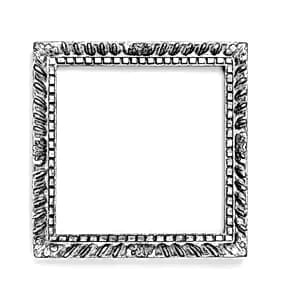
Fragment of a cassetta frame
Unknown Artist
late 16th century
Medium
Pine
Dimensions
Overall: 17 1/4 × 17 1/8 in. (43.8 × 43.5 cm) Sight: 13 5/8 × 13 9/16 in. (34.6 × 34.5 cm) Rabbet: 14 3/8 × 14 9/16 in. (36.5 × 37 cm)
Classification
Frames
Culture
Spanish, Seville
Department
Robert Lehman Collection
Museum
Metropolitan Museum of Art, New York, NY
Credit
Robert Lehman Collection, 1975
Accession Number
1975.1.2367
Rights
Public Domain
Art Historical Context
This exquisite fragment of a cassetta, crafted in pine by an unknown artist in late 16th-century Seville,, offers a glimpse into the opulent framing traditions of Renaissance-era Europe. Cassetta frames, with their distinctive box-like structure featuring a flat outer edge and inner moldings, originated in Italy during the Renaissance and became popular across Europe for enclosing paintings, especially altarpieces and portraits. Measuring about 17 inches square overall, this pine example from Seville—then a thriving artistic hub in Andalusia—highlights the city's role as a center for woodworking and religious art amid Spain's Golden Age. Pine was a practical yet versatile choice for such frames, allowing skilled carvers to shape intricate profiles while remaining lightweight for transport. Though incomplete, this fragment preserves the rabbet (the groove for holding a painting) and sight size, suggesting it once cradled a square panel, likely devotional in nature. Its presence in the Robert Lehman Collection at The Metropolitan Museum of Art underscores the refined craftsmanship of Sevillian workshops, which blended Italian influences with local flair during a time of cultural flourishing fueled by New World wealth. Visitors will appreciate how such frames elevated paintings from mere images to architectural statements, framing sacred narratives with equal artistry. A testament to enduring Spanish ingenuity!