
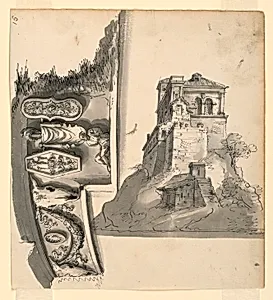
Frieze in Classical Style, A Villa Upon a Hill
Medium
architecture
Classification
architecture
Department
Smithsonian Collection
Museum
Smithsonian American Art Museum
Credit
Museum purchase through gift of various donors and from Eleanor G. Hewitt Fund
Accession Number
1938-88-512
Rights
Public Domain
About this artwork
Research in Progress
Art Historical Context
Behold the elegant *Frieze in Classical Style A Villa Upon a Hill by Italian artist Romolo Achille Liver (1809–1872), around 1840. This architectural piece captures a serene villa perched atop a hill, rendered in the timeless motifs of classical antiquity. As a frieze—a horizontal band typically found in ancient Greek and Roman temples—Liverani's work evokes the grandeur of antiquity through sculpted relief, blending architectural precision with evocative landscape imagery. Crafted in mid-19th-century Italy, during a neoclassical revival that romanticized ancient forms amid Europe's fascination with the Mediterranean past, this frieze reflects Liverani's skill in translating classical ideals into decorative art. Friezes like this served both structural and narrative roles in architecture, often depicting idyllic scenes to inspire harmony with nature. Its presence in the Smithsonian American Art Museum, acquired through donor gifts and the Eleanor G. Hewitt Fund, underscores its role in bridging Italian heritage with American collections. Though research continues, this piece invites us to ponder the enduring allure of classical villas—symbols of leisure and elevation—reminding visitors of architecture's power to transport us to sunlit hillsides of yore.