
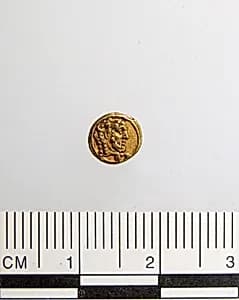
Gold coin
Unknown Artist
ca. 391–380 BCE
Medium
Gold
Dimensions
Diameter: 3/16 × 1/16 in., 1.1g (0.5 × 0.1 cm, 1.1g)
Classification
Coins
Culture & Period
Cypriot · Classical
Department
Greek and Roman Art
Museum
Metropolitan Museum of Art, New York, NY
Credit
The Cesnola Collection, Purchased by subscription, 1874–76
Accession Number
74.51.3668
Rights
Public Domain
Tags
Art Historical Context
This exquisite gold coin, struck around 391–380 BCE in Cyprus during the Classical period, exemplifies island's rich numismatic tradition. Measuring just 3/16 × 1/16 inches and weighing a mere 1.1 grams, its diminutive size belies its immense value—gold signified prestige and wealth in Cypriot city-kingdoms like Salamis or Kition, where such coins circulated as high-denomination currency for trade and tribute. Featuring a finely engraved male profile, a hallmark of Classical Greek-influenced portraiture, the coin showcases advanced die-striiking techniques. Artisans hammered blank flans between engraved dies to imprint intricate details, capturing the subject's dignified features with remarkable precision for such a small scale. This profile style, evoking heroic or royal figures, linked everyday transactions to the divine and political authority. Part of The Cesnola Collection at the Metropolitan Museum of Art—acquired through public subscription in 1874–76—this artifact offers a tangible glimpse into Cyprus's cosmopolitan culture, blending Phoenician, Greek, and Eastern influences amid Persian dominance. It reminds us how tiny objects like this bridged commerce, art, and power in the ancient Mediterranean world.