
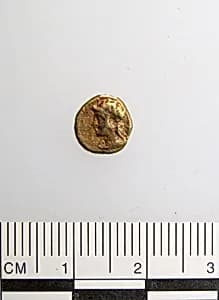
Gold coin
Unknown Artist
ca. 312–306 BCE
Medium
Gold
Dimensions
Diameter: 1/4 (0.7, 0.89g)
Classification
Coins
Culture & Period
Cypriot · Classical
Department
Greek and Roman Art
Museum
Metropolitan Museum of Art, New York, NY
Credit
The Cesnola Collection, Purchased by subscription, 1874–76
Accession Number
74.51.3671
Rights
Public Domain
Tags
Art Historical Context
This exquisite gold coin, minted in Cyprus around 312–306 BCE during Classical period, exemplifies the artistry of ancient numismatics. Struck from high-purity gold and measuring just a quarter-inch in diameter (0.7–0.89 grams), it showcases the precision of Cypriot die-engraving techniques. The obverse likely features Aphrodite, the revered on the island as a symbol of love, beauty, and fertility—her cult center at Paphos made Cyprus her mythical birthplace. As a product of the turbulent era following Alexander the Great's conquests, this coin reflects Hellenistic influences blending Greek and Near Eastern styles. Cypriot rulers issued such staters to assert authority and facilitate trade across the Mediterranean, with Aphrodite's image underscoring local religious devotion amid political shifts from Persian to Ptolemaic control. Gold's rarity and luster made these coins prized emblems of wealth and power. Acquired through The Cesnola Collection at the Metropolitan Museum of Art, this tiny treasure highlights Cyprus's pivotal role in the ancient world. Visitors marvel at how such miniature masterpieces encoded cultural identity, inviting us to ponder the divine allure that captivated civilizations millennia ago.