
Grabeau
Medium
Classification
Department
Smithsonian Collection
Museum
Smithsonian American Art Museum
Credit
National Portrait Gallery, Smithsonian Institution
Accession Number
S/NPG.2018.83.2
Rights
Public Domain
Tags
Art Historical Context
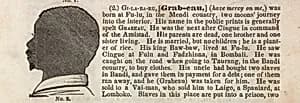
"Grabeau" is a striking silhouette print created in 1840 by John Warner Barber, a prolific 19th-century American engraver and illustrator (1798–1885). Barber gained fame for his detailed historical views, portraits, and contributions to illustrated books chronicling American life and events. Housed in the Smithsonian American Art Museum's National Portrait Gallery collection, this work exemplifies the era's popular printmaking traditions, offering an accessible window into pivotal figures of the time. The portrait depicts Grabo, tagged as a male insurrectionist, rendered in the classic silhouette style—a technique where subjects are outlined in solid black against a light background. Silhouettes, inexpensive and quick to produce, were a democratic art form in early America, capturing likenesses without facial details and often used for book illustrations. This medium's stark simplicity heightens the subject's enigmatic presence, evoking the dramatic tensions of antebellum America amid debates over slavery and rebellion. As part of the Smithsonian Collection, "Grabeau" holds cultural importance for preserving lesser-known historical narratives through visual memory. Barber's precise craftsmanship underscores the print's role in documenting insurrectionists, inviting visitors to reflect on America's complex past. (198 words)