
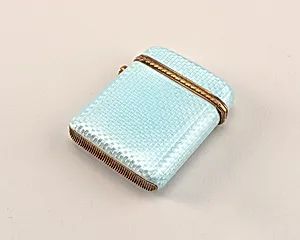
Guilloche Enamel Match Safe
late 19th century
Classification
containers
Department
Smithsonian Collection
Museum
Smithsonian American Art Museum
Credit
Gift of Stephen W. Brener and Carol B. Brener
Accession Number
1978-146-482
Rights
Public Domain
About this artwork
Research in Progress
Art Historical Context
Step into the opulent world of imperial luxury with this *Guilloche Enamel Safe* from the House of Fabergé, crafted in the late 19th century. in 1842 by Gustav Fabergé and elevated to legendary status under his son Peter Carl, the firm became synonymous with exquisite objets d'art for Russia's Romanov dynasty and European aristocracy. This petite container, designed to safely hold matches—a practical necessity in the gaslit era—was transformed into a jewel-like treasure, exemplifying Fabergé's mastery of blending functionality with unparalleled elegance. The standout feature is its guilloché enamel technique, where intricate patterns are meticulously engraved into a metal base using a rose-engine lathe, then overlaid with translucent layers of fired enamel. This creates a shimmering, iridescent effect that catches the light, revealing the underlying motif beneath the vibrant hues. Such precision work highlighted Fabergé's innovative fusion of traditional Russian craftsmanship with Western influences, including Art Nouveau flourishes, making everyday items feel like miniature masterpieces. Housed in the Smithsonian American Art Museum as a gift from collectors Stephen W. Brener and Carol B. Brener, this match safe offers a glimpse into the Gilded Age's fascination with decorative excess. Though research continues, it embodies Fabergé's enduring legacy: turning the mundane into the magnificent, a testament to artistry that once graced tsarist palaces.