
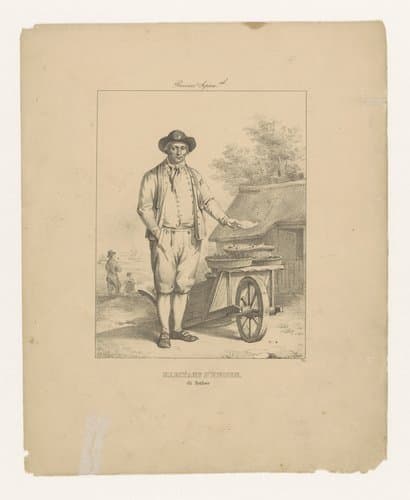
Habitant d'Huisen dit Botboer
Medium
lithography
Dimensions
277; 344
Rights
Public Domain
About this artwork
verzamelaarsmerk, verso, gestempeld: Lugt 2228
Art Historical Context
Created in 1825 by Belgian artist Guillaume Philidor Van den Burggraaff, *Habitant d'Huisen dit Botboer* is a striking early example of lithography, a printmaking technique that had only recently emerged as a popular artistic medium. Measuring 344 by 277 millimeters, the work portrays a resident of Huizen, a Dutch town on the Zuiderzee, identified by the nicknameBotboer.” The and subject reflect the nineteenth-century interest in regional types and local characters, capturing everyday Dutch life through the new reproductive possibilities of lithography. Lithography allowed artists to draw directly onto stone, producing rich tonal effects and fine detail that were well suited to portraiture and genre scenes. Van den Burggraaff’s print exemplifies this technical freedom, offering museum visitors a glimpse of how the medium helped democratize art by making affordable, high-quality images widely available. The collector’s stamp on the verso (Lugt 2228) further hints at the work’s journey through private collections, underscoring its enduring appeal to print enthusiasts. Today the lithograph serves as both a cultural snapshot and a testament to the rapid artistic innovations of the 1820s, when lithography began reshaping how people encountered images of distant places and people.
About the Artist
Guillaume Philidor Van den Burggraaff · 1790–present
Guillaume Philidor van den Burggraaff (born 1790) was a Belgian lithographer and engraver who worked in Brussels during the early-to-mid 19th century, contributing to the documentation of Belgian street life and popular culture through his lithographic prints. Born in Brussels in 1790, van den Burggraaff held the title of lithographer to the Royal Academy, indicating official recognition and insti...