
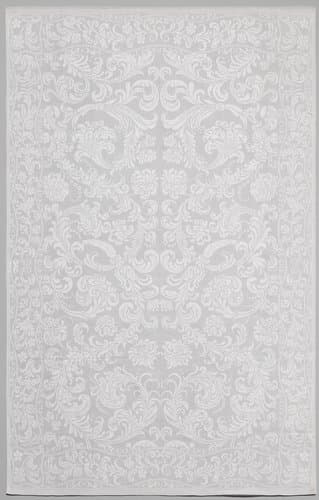
Handdwaal van linnendamast met een bloempatroon
Unknown Artist
ca. 1680 - ca. 1690
Medium
weaving
Dimensions
139; 88
Rights
Public Domain
About this artwork
height 139 cm x width 88 cm
Art Historical Context
Step into the refined world of 17th-century Dutch textiles with *Handdwaal van linnendamast met eenempatroon*, awoven linen damask hand towel dating to around 1680–1690. Measuring approximately 139 cm high by 88 cm wide, this piece showcases an intricate floral pattern, a hallmark of Baroque-era opulence. Though created by an unknown artisan, it exemplifies the skilled craftsmanship of anonymous weavers in the Netherlands during the Golden Age, when households prized such linens for their elegance and utility. Linen damask, the medium here, is a sophisticated weaving technique where satin and plain weaves alternate to form reversible patterns that shimmer in the light—satin areas reflecting sheen against a matte ground. Produced on complex drawlooms requiring multiple harnesses, these textiles demanded precision and patience, often taking weeks to complete. The floral motif, blooming across the fabric, reflects the era's fascination with nature's abundance, inspired by botanical illustrations and garden designs popular among the prosperous merchant class. Culturally, this hand towel was more than functional; it symbolized status in affluent homes, used for handwashing or as a decorative accent. Surviving examples like this are rare, offering a tactile glimpse into daily life amid the Dutch Republic's textile boom, fueled by global trade in flax and advanced looms. A testament to everyday artistry, it invites us to appreciate the unsung beauty in humble objects.