
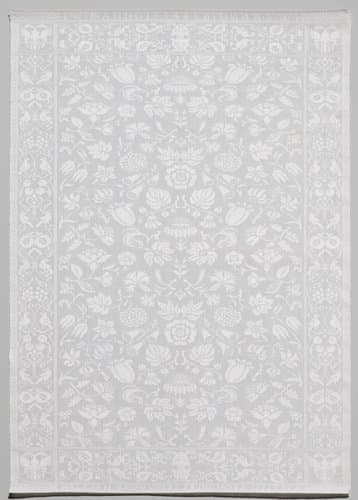
Servet van wit linnendamast
Unknown Artist
1634
Medium
damask
Dimensions
102; 70.8
Rights
Public Domain
About this artwork
datum
Art Historical Context
Step into the refined world of 17th-century Dutch domestic luxury with *Servet van wit linnendamast*, a exquisite white linen damask napkin dating to 1634. 102 cm high by 70.8 cm wide, this piece exemplifies the height of textile artistry during the Dutch Golden Age, a period of remarkable prosperity and cultural flourishing in the Netherlands. Crafted by an unknown weaver, it served as a table linen for elite households, where such items were essential for formal dining and displays of wealth. Damask weaving, the medium here, is a sophisticated technique using a satin weave to create subtle, reversible patterns through contrasts in sheen and texture—all in pristine white linen for an understated elegance. Produced on specialized drawlooms, these fabrics demanded skilled labor and fine flax threads, making them prized possessions. In 1634, amid booming trade in linen from Flanders and the Baltic, such napkins symbolized hygiene, hospitality, and social status, adorning tables during lavish meals. Though patterns remain unspecified, this napkin whispers of everyday opulence, bridging art and utility. It invites us to appreciate how textiles wove themselves into the fabric of history, turning the mundane into the magnificent.