
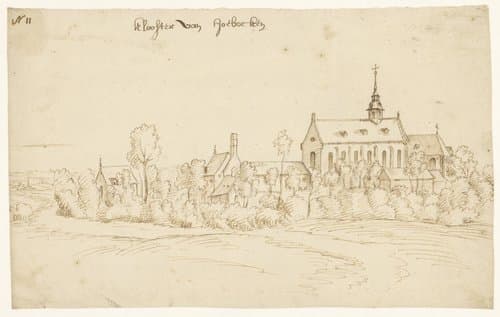
Het klooster van Hoboken
1600 - 1699
Medium
pen
Dimensions
185; 300
Rights
Public Domain
About this artwork
pen in bruin, potlood, inkt
Art Historical Context
**Het klooster van Hoboken is a delicate 17th-century drawing the lesser-known artist H. van, created sometime between 1600 and 1699. This work captures the architectural essence of the Monastery of Hoboken, a site near Antwerp in the Spanish Netherlands (modern-day Belgium). At 185 mm high by 300 mm wide, its modest scale suggests it may have been a preparatory study or personal sketch, reflecting the era's growing fascination with precise topographical views amid the Dutch Golden Age's artistic boom. Executed in brown ink (pen in bruin) with pencil underdrawing and additional ink touches, the piece showcases traditional techniques favored by draftsmen of the time. Brown ink, often iron gall, allowed for fine lines and subtle shading, ideal for rendering stone facades, arches, and monastic details. Pencil likely served as a light guide, adding to the drawing's spontaneity and technical precision—hallmarks of 17th-century Netherlandish draftsmanship influenced by masters like Rembrandt or architectural specialists. Though H. van Wel remains obscure, this artwork offers a glimpse into everyday religious life during a turbulent century of religious wars and Catholic resilience. It invites visitors to appreciate how such intimate pen works preserved vanishing monastic worlds, blending artistry with historical documentation in a single, evocative sheet.