
HUILIER
Classification
Department
Smithsonian Collection
Museum
Smithsonian American Art Museum
Credit
Purchased for the Museum by the Advisory Council
Accession Number
1921-6-404-3
Rights
Public Domain
About this artwork
Research in Progress
Art Historical Context
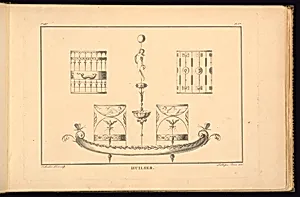
Henri Sallembier’s *Huilier* (1805) is captivating print from the early 19 century, created by the French artist (. 1753–1820) during the height of Napoleon Bonaparte’s Empire. Sallembier, known for his work in arts, produced this piece a flourishing neoclassical revival where opulent designs symbolized imperial grandeur. The *Huilier*—French for “oil cru” or cruet stand—suggests it depicts elegant table accessory, likely for fashionable dining ensembles of the eraAs a print in the Smithsonian American Art Museum’s, acquired through the Advisory, *Huilier exemplifies the era’s printmaking prowess. like this were vital for disseminating intricate designs to artisans across Europe and America, bridging fine art and functional objects. Though the exact medium remains under research, such works often employed etching or engraving to capture precise lines and lavish details, influencing furniture makers and silversmiths. This piece invites us to ponder the intersections of utility and luxury in Napoleonic France, where everyday items became canvases for artistic ambition. Currently, scholarly research continues to uncover more about its techniques and context, promising fresh insights into transatlantic design exchanges.