
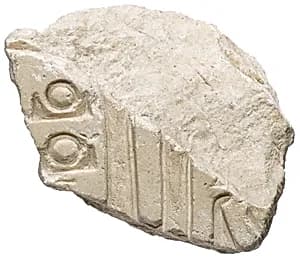
Inscribed fragment, Aten cartouches
Unknown Artist
ca. 1353–1336 B.C.
Medium
Indurated limestone
Dimensions
H. 5.3 × W. 6 × D. 5.5 cm (2 1/16 × 2 3/8 × 2 3/16 in.)
Classification
Inscribed fragment, Aten cartouches
Period
New Kingdom, Amarna Period
Department
Egyptian Art
Museum
Metropolitan Museum of Art, New York, NY
Credit
Gift of Edward S. Harkness, 1921
Accession Number
21.9.520
Rights
Public Domain
Art Historical Context
This petite inscribed fragment of indurated limestone, just over 2 inches across, hails from Egypt's New Kingdom Amarna Period (ca. 1353–1336 B.C.), Dynasty 18. It bears the cartouches—oval royal name enclosures—of Aten, the sun disk deity central to Pharaoh Akhenaten's radical monotheistic reforms. Likely part of a larger sculpture or architectural element, such as a temple block or statue base, it offers a tangible glimpse into one of ancient Egypt's most transformative eras. The Amarna Period marked a dramatic artistic and religious shift under Akhenaten, who abandoned traditional polytheism for exclusive worship of Aten, symbolized by a radiant solar disk with extended rays. Hieroglyphs on this fragment, carved with precision into the durable, hardened limestone, reflect the era's distinctive style: elongated forms, naturalism, and bold iconography that emphasized the pharaoh's divine connection to the sun god. Such pieces were once ubiquitous in Akhenaten's new capital, Akhetaten (modern Amarna), before his successors erased much of this "heretical" legacy. Today, this rare survivor, gifted to the Metropolitan Museum of Art in 1921 by Edward S. Harkness, underscores the fragility of history and the enduring allure of Amarna's artistic revolution. Visitors can marvel at how a small shard encapsulates a pharaoh's bold vision that reshaped Egyptian culture.