
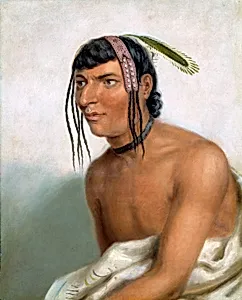
Jack-o-pa (The Six)
Medium
Painting
Classification
Painting
Department
Smithsonian Collection
Museum
Smithsonian American Art Museum
Credit
Smithsonian American Art Museum, Transfer from Bureau of American Ethnology
Accession Number
1985.66.258,359
Rights
Public Domain
Tags
Art Historical Context
**Jack-o-pa (The Six)** by Charles Bird King (1827) is a compelling portrait from the Smithsonian American Art Museum collection, originally transferred from the Bureau of Ethnology. This oil painting captures Jack-o-pa, a prominentpewa (Ojibwe) leader, showcasing King's skill in rendering the dignified presence of Native American delegates who visited Washington, D.C., during a pivotal era of U.S.-tribal negotiations. Painted amid early 19th-century treaty discussions, the work reflects a government-commissioned effort to document Indigenous leaders before widespread removal policies reshaped Native lands. King's neoclassical style emphasizes the subject's noble bearing, with precise brushwork highlighting facial features, attire, and cultural symbols that convey authority and heritage. As a male portrait, it humanizes Jack-o-pa, offering visitors a window into Chippewa identity and the complex intercultural exchanges of the time. Housed in the Smithsonian, this piece holds enduring cultural significance, preserving a visual record of diplomacy and resilience. It invites reflection on how art bridged—or sometimes obscured—diverse worlds in antebellum America.