
Jacob Knapp
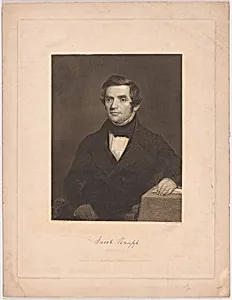
Medium
Classification
Department
Smithsonian Collection
Museum
Smithsonian American Art Museum
Credit
National Portrait Gallery, Smithsonian Institution; transfer from the Archives of American Art
Accession Number
S/NPG.84.32
Rights
Public Domain
Tags
Art Historical Context
**Jacob Knapp (1842)** Created by the American engraver Denison Kimberly1814–1863), this portrait print captures the likeness of Jacob Knapp, a prominent male clergy member. Produced in 1842, during a vibrant period of American religious revivalism, the work reflects the era's fascination with influential spiritual leaders. As part of the Smithsonian American Art Museum's collection—transferred from the Archives of American Art—this piece now resides in the National Portrait Gallery, highlighting its enduring value in documenting 19th-century figures. The print medium was revolutionary in the 1840s, enabling affordable reproduction and wide dissemination of portraits through newspapers, books, and pamphlets. Kimberly's technique likely employed fine-line engraving, a precise method that conveyed detailed facial features, attire, and dignified posture to evoke authority and piety. Such portraits immortalized clergy like Knapp, who played key roles in community life amid the Second Great Awakening's fervor. This artwork offers a window into mid-19th-century American culture, where visual representations of religious leaders bridged art and faith. Visitors can appreciate how prints democratized portraiture, making icons accessible beyond elite circles. (178 words)