
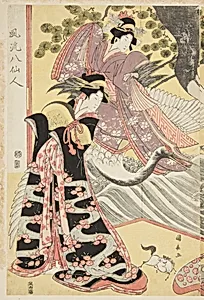
Kabuki players as the Eight Sennin (Triptych)
1810–20
Classification
figures
Department
Smithsonian Collection
Museum
Smithsonian American Art Museum
Credit
Museum purchase through gift of Mrs. Charles B. Alexander
Accession Number
1963-12-1-a
Rights
Public Domain
About this artwork
Research in Progress
Art Historical Context
Behold the vibrant triptych *Kabuki players as the Sennin* by Kininaga (d. ca. 1820), created around 1810–20. This captivating work from the Smithsonian American Art Museum collection portrays Kabuki actors embodying the legendary Eight Immortals (Sennin) from Daoist mythology—transcendent figures symbolizing longevity, wisdom, and supernatural feats. Acquired through a generous museum purchase funded by Mrs. Charles B Alexander's gift, it the fusion of theater and folklore in early 19th-century Japanese art. During Japan's Edo period, Kabuki theater was a cultural phenomenon, blending drama, dance, and elaborate costumes to captivate urban audiences. Kininaga, active in this era, captures actors in dynamic poses, highlighting their star power through the triptych format—a three-panel composition ideal for expansive scenes in popular prints. Classified among "figures," the artwork reflects the era's obsession with celebrity performers, transforming mythical immortals into theatrical spectacles. Though research continues, this piece offers a window into ukiyo-e influences, where everyday entertainment met timeless legends. Imagine the buzz of Edo crowds admiring these prints— a testament to art's role in preserving cultural vibrancy. (198 words)