
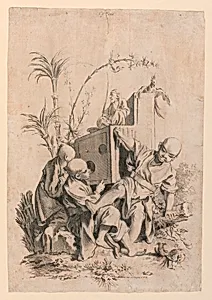
La Veue (Sight) from the series Les Cinq Senses (The Five Senses)
1720–1770
Medium
figures
Classification
figures
Department
Smithsonian Collection
Museum
Smithsonian American Art Museum
Credit
Gift of Eleanor and Sarah Hewitt
Accession Number
1924-15-136
Rights
Public Domain
About this artwork
Research in Progress
Art Historical Context
François Boucher, one of the leading figures of the French Rococo movement, created “La Veue (Sight)” as part of his series The Five Senses. Active from the 1720s through the 1770s, Boucher was celebrated for his graceful, light-filled compositions that celebrated beauty, pleasure, and the natural world. This allegorical figure, now in the Smithsonian American Art Museum, embodies the Rococo taste for elegant, decorative works that brought refined themes into domestic settings. The series explores the five senses through charming personifications, a popular subject in eighteenth-century European art. “Sight” would have invited viewers to reflect on perception and the pleasures of seeing, themes that resonated during the Enlightenment. Classified simply as “figures,” the work likely served as a small-scale decorative object—possibly porcelain or another sculptural medium—designed to delight the eye on a tabletop or mantel. Gifted to the museum by Eleanor and Sarah Hewitt, the piece remains part of ongoing research. Its presence in the collection highlights how Boucher’s designs bridged painting, sculpture, and the decorative arts, offering today’s visitors a window into the refined visual culture of pre-Revolutionary France.