
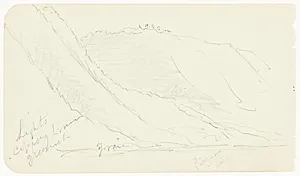
Lake Pátzcuaro, Mexico
Medium
landscapes
Classification
landscapes
Department
Smithsonian Collection
Museum
Smithsonian American Art Museum
Credit
Gift of Louis P. Church
Accession Number
1917-4-1256-b
Rights
Public Domain
About this artwork
Research in Progress
Art Historical Context
Frederic Edwin Church, leading figure of the Hudson River School, captured the serene beauty of *Lake Pátzcuaro, Mexico* between 1883 and 1884. Born in 1826, Church was renowned for his luminous, detailed landscapes that celebrated the grandeur of nature, often drawing from his extensive travels. By the 1880s, later in his career and amid personal health challenges, he turned his gaze southward to Mexico, rendering this tranquil lake scene with his signature precision and atmospheric depth. Lake Pátzcuaro, nestled in Mexico's Michoacán region, is a volcanic crater lake sacred to the indigenous Purépecha people, dotted with islands and framed by misty mountains. Church's work reflects the 19th-century American fascination with exotic locales, blending Romanticism's awe of nature with meticulous observation—likely in oil on canvas, evoking the play of light on water that defined his style. This painting exemplifies his ability to transport viewers to distant wonders, bridging American landscape traditions with global exploration. Today, *Lake Pátzcuaro* graces the Smithsonian American Art Museum, a gift from Church's son, Louis P. Church. It invites visitors to ponder nature's timeless allure through one of America's master landscapists. (198 words)