
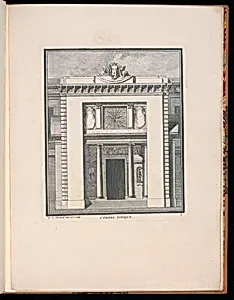
L’ORDRE IONIQUE
Medium
Classification
Department
Smithsonian Collection
Museum
Smithsonian American Art Museum
Credit
Purchased for the Museum by the Advisory Council
Accession Number
1921-6-485-3
Rights
Public Domain
About this artwork
Research in Progress
Art Historical Context
**L’ORDRE ION** is a meticulous print by French artist Louis-Gustave Taraval (1738–1794), created between 1768 and 1775. Taraval, a skilled engraver and painter active during the height of French Neoclassicism, produced this work as part of the Enlightenment-era fascination with ancient architecture. Housed in the Smithsonian American Art Museum's Print Collection—purchased by the Advisory—it exemplifies 18th-century efforts to document and revive classical forms. The title translates toThe Ionic Order," referring to one of the three principal orders of ancient Greek and Roman architecture, distinguished by its elegant volute-scroll capitals, slender columns, and graceful proportions. As a print, likely an engraving, Taraval's piece would have served as an educational tool for architects, artists, and scholars studying Vitruvius's principles or excavating antiquities. This medium allowed for precise replication and wide dissemination, bridging artistic expression with technical instruction. In the context of pre-Revolutionary France, such works underscored a cultural reverence for antiquity amid rococo excess, influencing Neoclassical designs in public buildings and interiors. Though research continues, **L’ORDRE IONIQUE** invites visitors to appreciate how prints preserved classical harmony, inspiring generations to harmonize form and function in art and architecture. (198 words)