
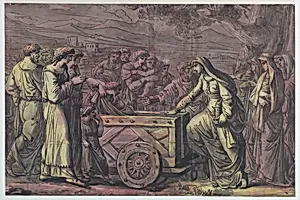
Lucius Albinius Rescues the Vestal Virgins
Classification
figures
Department
Smithsonian Collection
Museum
Smithsonian American Art Museum
Credit
Gift of Mrs. Grafton H. Pyne
Accession Number
1948-118-30
Rights
Public Domain
About this artwork
Research in Progress
Art Historical Context
In the early 19th century, Italian artist Antonio Giuseppe Basoli (1774–1843) captured a dramatic episode from ancient Roman history in *Lucius Albiniuscues the Vestalgins*. The scene depicts Lucius Albinius, a simple plebeian, heroically saving the sacred Vestal Virgins during the Gallic sack of Rome in 390 BCE Amid the chaos of invasion, Albinius placed the priestesses—guardians of Vesta's eternal flame—onto his cart alongside his family, prioritizing their holy duty over his own possessions. This act of piety and valor became a symbol of Roman resilience and devotion. Basoli, a prominent Bolognese painter and engraver working in the Neoclassical style, excelled at rendering classical subjects with precise, idealized figures that evoke the grandeur of antiquity. Classified among "figures" in the Smithsonian American Art Museum's collection, this work highlights his skill in dramatic composition and historical narrative, bridging Renaissance traditions with Enlightenment-era reverence for ancient virtue. Though the medium remains unidentified amid ongoing research, it reflects Neoclassicism's emphasis on moral lessons drawn from the past. A generous gift from Mrs. Grafton H. Pyne, the artwork enriches the Smithsonian's holdings, inviting visitors to ponder timeless themes of sacrifice and civic duty. As research progresses, it promises deeper insights into Basoli's technique and legacy.