
Luiheid
1550 - 1625
Medium
engraving
Dimensions
256; 211
Rights
Public Domain
About this artwork
collector's mark: Lugt 2760
Art Historical Context
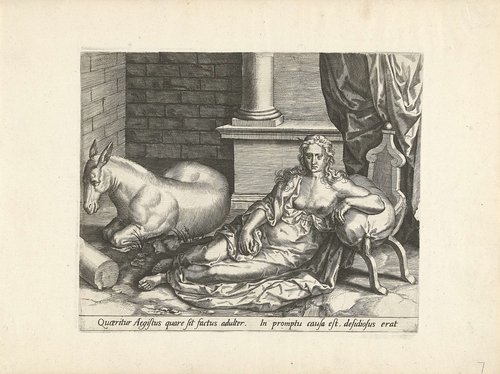
**Luiheid** *Pieter Jalhea Furnius, ca. 1550–1625* *Engraving, 211 × 256 mm* Step into the intricate world of 16th-century Flemish engraving with *Luiheid* by Pieter Jalhea Furn, a master printmaker active during the Renaissance transition into the Baroque era. The title, Dutch for "Sloth" or "Idleness," the moral allegories popular in Northern European art, where vices were vividly depicted to instruct and warn viewers. Created between 1550 and 1625, this work reflects the era's fascination with human flaws, often drawing from religious and classical themes to promote virtue amid the Reformation's cultural upheavals. Engraving, Furnius's chosen medium, involved incising fine lines into a copper plate with a burin, allowing for precise, expressive details that could be inked and printed in multiples. At 211 mm high by 256 mm wide, *Luiheid* exemplifies how this technique democratized art, making elaborate imagery accessible beyond elite patrons. The presence of the collector's mark Lugt 2760 underscores its esteemed provenance, linking it to discerning 19th- or 20th-century connoisseurs who valued such prints for their technical virtuosity and narrative depth. This piece invites us to ponder timeless human struggles, blending artistry with ethical reflection in a compact, powerful form.
About the Artist
Pieter Jalhea Furnius · 1530–1615
Pieter Jalhea Furnius (1530–1615, though some sources suggest 1545–1610) was a Flemish engraver and draughtsman who worked during the height of Antwerp Mannerism, creating engravings that disseminated the works of prominent Northern European artists throughout Europe. Trained under the renowned painter Lambert Lombard in Liège, Furnius established himself in Antwerp, the commercial and artistic ca...