
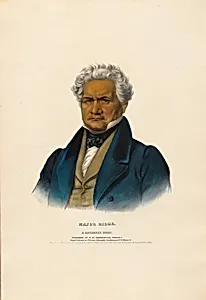
Major Ridge
c. 1837
Medium
Classification
Department
Smithsonian Collection
Museum
Smithsonian American Art Museum
Credit
National Portrait Gallery, Smithsonian Institution; gift of Betty A. and Lloyd G. Schermer
Accession Number
NPG.99.167.43
Rights
Public Domain
Tags
Art Historical Context
This evocative print portrait, titled *Major Ridge* and created by an unidentified artist around 1837, captures the likeness of a prominent Native American leader and. Housed in the Smithsonian American Art Museum Smithsonian Collection, it was generously gifted to the National Portrait Gallery by Betty. and Lloyd G.ermer. The image depicts Ridge in formal attire, including a distinctive bowtie, blending Cherokee heritage with Western influences—a visual nod to his role as a bridge between cultures during a turbulent era. Major Ridgec. 1771–1839) was a key Cherokee chief who navigated the pressures of U.S. expansion in the early 19th century. As a signer of the controversial Treaty of New Echota in 1835, he played a pivotal role in events leading to the forced removal of the Cherokee Nation along the Trail of Tears, highlighting the complex tensions of Native sovereignty and assimilation. This print, likely reproduced from an earlier image, served as a vital tool for disseminating his image amid national debates on Indigenous rights. As a work in the print medium, *Major Ridge* exemplifies 19th-century portraiture's democratic reach, making elite figures accessible to a wider public. Its presence in the Smithsonian underscores the cultural importance of documenting Native American leaders, offering visitors a window into resilience, diplomacy, and historical reckoning. (198 words)