
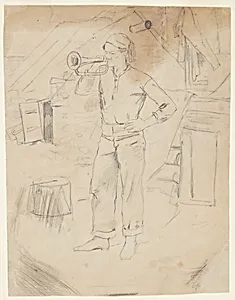
Man Wearing Zouave's Cap
Classification
figures
Department
Smithsonian Collection
Museum
Smithsonian American Art Museum
Credit
Gift of Charles Savage Homer, Jr.
Accession Number
1912-12-114
Rights
Public Domain
About this artwork
Research in Progress
Art Historical Context
Winslow Homer's *Man Wearing Zouave's* (ca. 1861) captures a pivotal moment in American history, created on the eve of the Civil War. Homer, a pioneering American realist born in 1836, began his career as an illustrator for Harper's Weekly, sketching soldiers and camp life. The Zouaves were elite Union infantry units inspired by French North African troops, famed for their vibrant baggy trousers, sashes, and distinctive tasseled caps—symbols of exotic flair amid the grim conflict. This figure study likely portrays one such soldier or volunteer, reflecting the war's early enthusiasm before its brutal toll. As an early work from Homer's oeuvre, the painting exemplifies his emerging style: unvarnished realism that humanized ordinary troops, foreshadowing masterpieces like *The Veteran* or *Breezing Up*. Though the medium remains unidentified amid ongoing research, Homer's technique—bold lines and direct observation—elevated genre scenes to high art, influencing American painting's shift from Romanticism to modernity. Housed in the Smithsonian American Art Museum through a family gift, it offers a poignant glimpse into 1860s military culture and Homer's lifelong fascination with resilience. (178 words)