
Maruami Gorō Saved by Fudō's (Acala) Attendant Seitaka from Narita Shrine
19th century
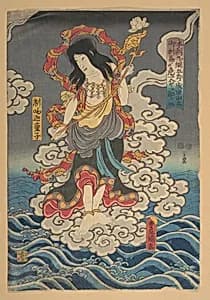
Medium
Woodblock print; ink and color on paper
Dimensions
Image: 14 3/8 x 9 7/8 in. (36.5 x 25.1 cm)
Classification
Prints
Culture & Period
Japan · Edo period (1615–1868)
Department
Asian Art
Museum
Metropolitan Museum of Art, New York, NY
Credit
Bequest of William S. Lieberman, 2005
Accession Number
2007.49.274
Rights
Public Domain
Art Historical Context
In the vibrant world of Edo-period Japan (1615–1868), Utagawa Kunisada (6–1865), a master of the ukiyo-e woodblock print tradition, captured dramatic tales from folklore and theater. This 19th print, *Maruami Gorō Saved by Fudō's (Acala) Attendantaka from Narita Shrine*, exemplifies Kunisada's skill in blending Buddhist mythology with popular storytelling. Fudō Myōō, the fierce protector deity known as Acala, and his loyal attendant Seitaka Doji were central to Shingon Buddhism, especially at Narita-san Shinshō-ji Temple in Narita, a major pilgrimage site. The scene depicts the legendary rescue of the warrior Maruami Gorō, highlighting themes of divine intervention and salvation. Kunisada's ukiyo-e technique—intricate carving on woodblocks, layered ink and color applications—brought dynamic movement and vivid emotion to paper. Measuring 14 3/8 x 9 7/8 inches, this intimate format was designed for affordable enjoyment by urban audiences in Edo (modern Tokyo). As part of the Metropolitan Museum of Art's Asian Art collection, bequeathed by William S. Lieberman in 2005, it showcases the print's cultural role in disseminating moral tales and shrine devotion during a time of relative peace and artistic flourishing. This work invites visitors to ponder Japan's rich fusion of religion, heroism, and artistry, where everyday woodblock prints preserved epic narratives for generations.
About the Artist
Utagawa Kunisada · 1786–1864
**Utagawa Kunisada (1786–1865)** Born in 1786 in the Honjo district of Edo (modern Tokyo), Utagawa Kunisada hailed from a family with a hereditary ferry-boat service that provided financial stability, allowing him to pursue art from a young age. His father, an amateur poet of note, died shortly after his birth, leaving young Sumida Shōgorō (Kunisada's childhood name) to nurture his evident talent...