
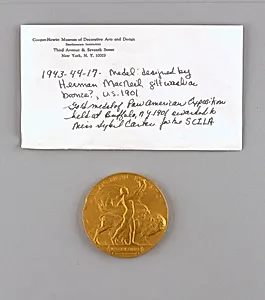
Medal
1901
Classification
numismatics
Department
Smithsonian Collection
Museum
Smithsonian American Art Museum
Credit
Gift of Mrs. William Bayard Cutting in memory of Mary E. Parsons
Accession Number
1943-44-17
Rights
Public Domain
About this artwork
Research in Progress
Art Historical Context
Herman MacNeil's *Medal* of 1901 exemplifies the artistry of American numismatics at the of the 20th. MacNeil, a renowned sculptor trained at the École des Beaux-Arts in Paris, bridged grand monumental works—like his contributions to the 1893 World's Columbian—with intricate medal designs. These small-scale masterpieces served as wearable or collectible sculptures, often commemorating events, figures, or ideals during the Progressive Era's cultural optimism. Crafted in an era when medals blended classical revival with emerging American identity, this piece reflects MacNeil's mastery of relief sculpture techniques, where high-relief modeling captured dynamic forms in miniature. Though details of its specific subject remain under research, its classification in numismatics highlights medals' role as accessible fine art, bridging sculpture and currency design—MacNeil later influenced U.S. coinage, such as the Standing Liberty Quarter. Now in the Smithsonian American Art Museum's collection, the medal was generously gifted by Mrs. William Bayard Cutting in memory of Mary E. Parsons, adding a layer of personal legacy. As research progresses, it invites visitors to appreciate how such artifacts encapsulate history's artistry in the palm of your hand.