
Merry-Go-Round Model
ca. 1890-1900
Medium
Decorative Arts
Classification
Decorative Arts
Department
Smithsonian Collection
Museum
Smithsonian American Art Museum
Credit
Smithsonian American Art Museum, Gift of Mrs. Edith Gregor Halpert
Accession Number
1966.91
Rights
Public Domain
Tags
About this artwork
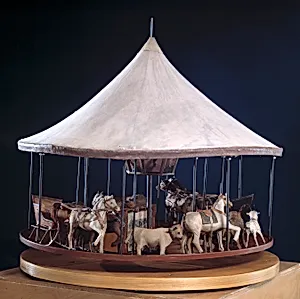
The mechanical merry-go-round appeared in 1850, when a patent was issued for the system that made the horses go up and down. Merry-go-rounds were very popular from the late nineteenth century until the Great Depression, and at one time, New York’s Coney Island offered twenty-four steam-driven carousels. This toy shows a cow and a goat along with the more traditional horses.
Art Historical Context
Step into the whimsical world of late 19th-century American leisure with the *Merry-Go-Round Model*, delightful toy crafted by an unidentified American artist around 189-1900. H in the Smithsonian American Art, this decorative arts sculpture the mechanical magic of the's beloved carousels Donated by Mrs. Gregor Halpert, it the playful ingenuity of recreational that brought carnival joys into. The full-scale merry-go-round revolutionized fun in 1850 with a patent for its signature up-and-down horse, surging in popularity through the late 1800s until the Great Depression. Iconic spots like New York’s Coney Island boasted up to twenty-four steam-powered versions, drawing crowds to spin in delight. This miniature model mirrors that excitement, featuring not just classic horses but also a cow and goat—charming nods to rural Americana and diverse carousel menageries. As a snapshot of Gilded Age recreation, the model highlights how toys democratized amusement culture, blending craftsmanship with cultural nostalgia. Visitors, imagine the giggles it sparked for children dreaming of Coney Island adventures!
About the Artist
Unidentified (American) ( ) · 1851 –1899
1851–1899