
Metamorphoseon sive transformationum
1606
Medium
etching
Dimensions
117; 104
Rights
Public Domain
About this artwork
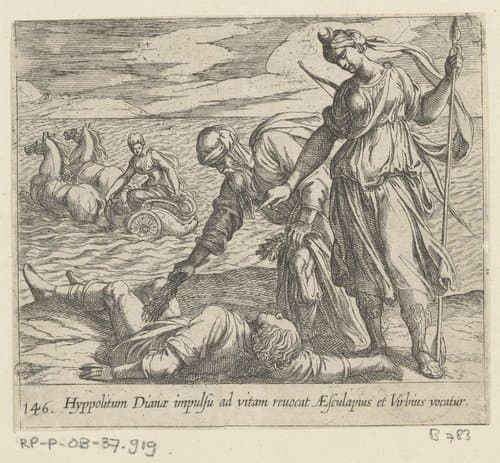
Deze prent maakt deel uit van een reeks van 150 prenten (+ titelprent) met voorstellingen van de Metamorfosen van Ovidius.
Art Historical Context
Antonio Tempesta's *Metamorphoseon s transformationum* (1606) is a captivating etching, measuring just 104mm by 117mm, that forms part of one of the most ambitious print series of the early Baroque era. This Italian artist, renowned for his dynamic depictions of mythology and landscapes, created 150 intricate etchings—plus a title plate—to illustrate Ovid's ancient Roman epic *Metamorphoses*. Published in Rome, the series brought the poet's tales of gods, heroes, and wondrous transformations to a wide audience through affordable, reproducible prints. Etching, Tempesta's favored medium, allowed for fine, expressive lines etched into a metal plate with acid, enabling the detailed rendering of dramatic scenes like mortals turning into trees or animals. This technique was revolutionary for its precision and tonal depth, making complex narratives accessible beyond elite patrons. Tempesta's style blends Mannerist elegance with emerging Baroque energy, capturing the fluidity of change central to Ovid's stories. As a single plate from this monumental project, it highlights the Renaissance revival of classical antiquity, influencing artists across Europe. Visitors will appreciate how these small gems preserved and popularized mythology, bridging ancient literature with 17th-century visual culture.
About the Artist
Antonio Tempesta · 1555–1630
Antonio Tempesta (1555–1630), known as 'Il Tempestino,' was a Florentine painter and printmaker whose extraordinary output of approximately 1,700 etchings made him one of the most influential printmakers of the early Baroque period. Born in Florence and trained under Santi di Tito and the Flemish master Joannes Stradanus, he enrolled in the Accademia del Disegno in 1576 before relocating to Rome i...